
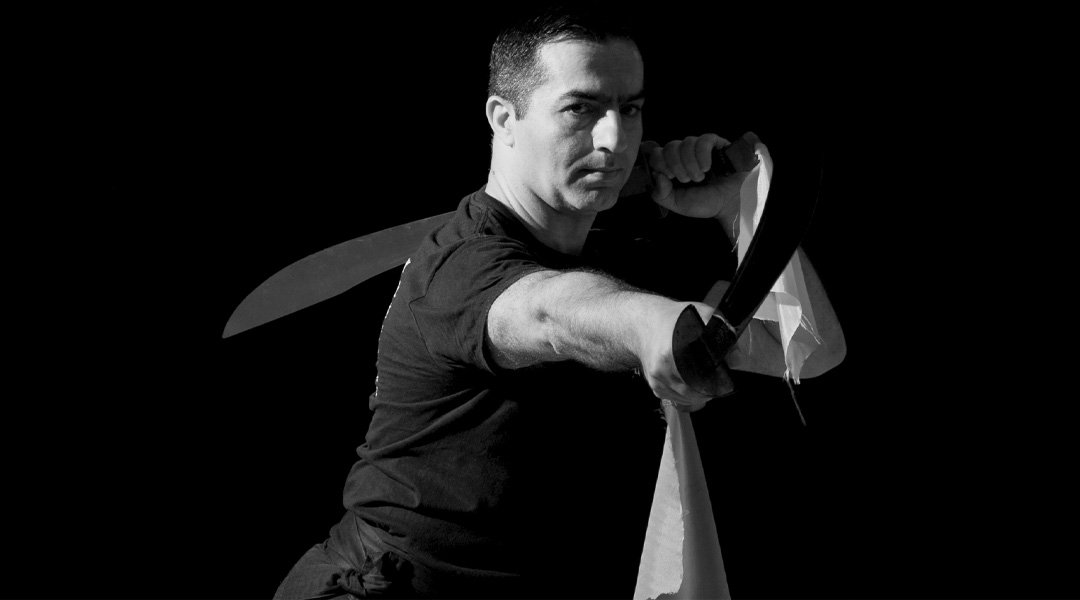
Why Hung Kuen? — An Anchor in a Fragmented World
In a modern landscape that is increasingly transient, digital, and disconnected from physical reality, the question of why becomes unavoidable.
- Why spend years repeating the same movements?
- Why commit to a system refined generations ago?
Because most people today are not lacking options. They are lacking something stable to build on—something that does not shift when everything else does.
Hung Kuen, trained correctly, provides that. Not as an idea, but as a process—one that develops the person across physical, psychological, and cultural dimensions, in a way that holds over time.
The Reality of the Method
Hung Kuen is not complex. It is direct, structured, and built on principles that do not change. It has worked consistently across generations because it was designed to do so. It does not rely on novelty, and it does not expire with age. If anything, it reveals more as the practitioner develops—not because the system changes, but because the practitioner becomes capable of accessing more of it.
The difficulty today is not a lack of systems; it is a lack of continuity within them.
Most people do not stay long enough in any one method to reach its core. They move from system to system, accumulating techniques but never developing the structure required to make those techniques functional. What appears as variety is often a lack of depth.
Cross-training has always had value. But historically, it was built on a foundation—not used as a substitute for one. Hung Kuen, learned and trained properly, provides that foundation. It is not a collection of techniques. It is a complete engine that supports everything else.
For me, this has not been theoretical. The process of learning, training, and growing within Hung Kuen has been constant and, at times, decisive. It has worked simply and directly, and it continues to do so.
It is simple. But it is not easy. And it is not meant to be.
Anything that produces something real—something that holds under pressure and endures over time—demands effort. The difficulty is not a flaw in the system; it is part of what allows it to work.
Clarity Over Myth
There are no secrets in this system. No hidden shortcuts. No reliance on belief. No requirement to accept something that cannot be tested. What exists is a precise method, built on clear principles and maintained through consistent training.
The mechanics are straightforward. The standard is not.
The system does not hide behind complexity. It does not ask to be admired. It asks to be trained—honestly, consistently, and without compromise.
The Layers of Development
Hung Kuen does not develop one quality in isolation. It builds multiple capacities at once, each reinforcing the others.
1. Physical Structure
Everything begins with the body. Not in terms of fitness, but in terms of structure. By incorporating traditional training methods, practices and principles perfected over generations, we build a body that remains resilient and sustainable over time.
Stance training for example, is not a preliminary exercise; it is the foundation. It develops alignment that can hold under pressure and a base that does not collapse when tested. If the structure fails, nothing built on top of it will function reliably.
- You cannot download this.
- You cannot shortcut it.
- It has to be built.
2. Internal and External Coordination
This is the ability to move without conflict—where effort is directed efficiently and the body does not work against itself. The exterior remains stable, while the interior remains adaptable. Beyond physical conditioning lies the pursuit of perfect harmony of internal and external.
Without this, movement becomes rigid or disconnected. With it, every action becomes precise.
3. Psychological Stability
Training exposes the mind. Repetition, discomfort, and sustained effort develop something that cannot be achieved through theory: the ability to remain functional under pressure.
- Calm is not assumed.
- It is trained.
Over time, this produces clarity, patience, and the ability to act without hesitation.
4. Cultural and Lineage Context
To train is to step into a structure that has been refined over time. This provides context—not for the sake of tradition alone, but for maintaining standards.
The system carries expectations:
- Consistency
- Discipline
- Respect for the process
Without this framework, training becomes individualized and inconsistent. With it, there is continuity.
5. Integration
At a certain point, these elements stop feeling separate. The training is no longer something you do in isolation—it starts to influence how you operate more broadly:
- How you manage pressure.
- How you approach difficulty.
- How you maintain stability when conditions change.
The system becomes less about performing techniques, and more about how you function as a whole.
The Evolution of Intent
Most people begin training with a specific goal: to learn to fight, to improve fitness, or to develop focus. Hung Kuen supports all of these. But over time, something shifts.
The system remains constant; the practitioner does not.
What begins as a specific aim gradually becomes a broader process of development. The emphasis moves from outcome to method—from what you gain, to what you build. You will get out of the system what you are willing to invest into it.
Nothing more. Nothing less.
The Value of Continuity
The real value of Hung Kuen is not found in short-term results. It is found in what it becomes over time, if it is trained properly.
- In youth, it provides intensity, structure, and challenge.
- Later, it provides stability, clarity, and sustainability.
It does not need to be replaced. It deepens. But this only happens if the training is consistent and the transmission is correct. Without a clear method and proper guidance, effort becomes fragmented, and the system cannot function as intended.
The Choice
Hung Kuen does not offer quick results. It offers something more demanding: a process that, over time, builds something real.
- Not performance.
- Not appearance.
- But capacity.
In a world that is increasingly unstable and fragmented, that has value. But it is not given. It is built.
The system does not build itself. What it becomes depends on what you are willing to do with it.